Get 10% off your first purchase with the coupon code PRIMEIRA10

Methylene Blue
Methylene Blue
1/1/20254 min read
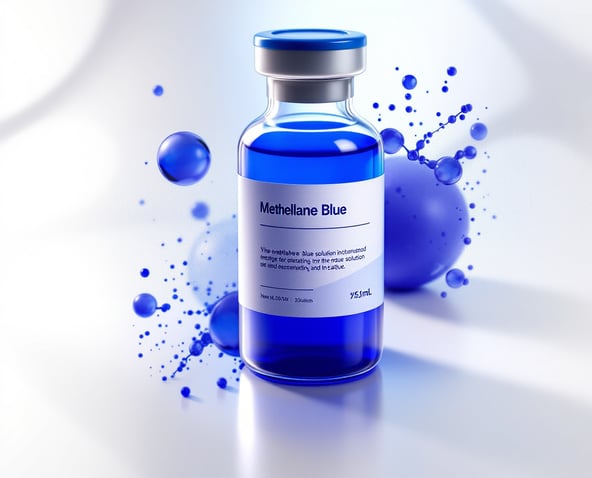
Methylene Blue: Unlocking Its Benefits in Skincare, Healthcare, and Wellness
Methylene blue, a synthetic dye developed over a century ago, has emerged as a remarkable compound with applications that extend far beyond its original uses. Today, it is gaining considerable attention in the realms of skincare, healthcare, and wellness. This blog explores the multifaceted benefits of methylene blue, examining its potential as a potent antioxidant, a promoter of cellular regeneration, and an agent for neuroprotection, among other promising applications. Medical studies and credible sources provide insight into the mechanisms behind these benefits and help frame the discussion around its safe and effective use.
Applications in Skincare
Methylene blue has become particularly relevant in the cosmetics and skincare sectors for its anti-aging and reparative properties. Research indicates that its antioxidant effects can mitigate oxidative stress, a major factor contributing to cellular aging. For example, a study published in Nature demonstrated that methylene blue increases the viability of skin fibroblasts, delays cellular senescence, and improves skin hydration and elasticity through enhanced collagen and elastin production. These findings underscore its potential to rejuvenate aging skin and support repair mechanisms in damaged cells (Nature).
In addition to its anti-aging benefits, methylene blue acts as a UV absorber. Unlike conventional sunscreen ingredients, it offers an innovative approach to UV protection by neutralizing free radicals generated by ultraviolet exposure. This dual action not only protects the skin from external damage but also promotes the regeneration of intrinsic cellular defenses—a combination that could revolutionize natural UV defense strategies (Scientific Reports).
Furthermore, methylene blue has been found to stimulate mitochondrial activity in skin cells, enhancing energy production and accelerating the repair of cellular damage. This mitochondrial boost can lead to improved skin texture and overall cellular health, positioning methylene blue as a promising ingredient in advanced skincare formulations (Biology Insights).
Healthcare Benefits
Methylene blue has a long-standing history in the medical field. Its application in treating methemoglobinemia—a condition in which hemoglobin is rendered ineffective at transporting oxygen—is well documented. By restoring the normal state of hemoglobin, the compound provides critical therapeutic benefits at low doses (MedClinRes).
Beyond this traditional use, methylene blue is receiving growing attention for its neuroprotective properties. Studies have shown that it crosses the blood-brain barrier, enhances mitochondrial function, and reduces oxidative stress in neural tissue. These mechanisms contribute to its potential in mitigating neurodegenerative disorders such as Alzheimer’s and Parkinson’s diseases. For instance, research accessible through the National Center for Biotechnology Information (NCBI) reveals that methylene blue can prevent the aggregation of amyloid-beta and tau proteins—key markers of Alzheimer’s—thus suggesting its utility in the early intervention of neurodegeneration (PMC).
Additionally, methylene blue’s antimicrobial properties make it a suitable candidate for photodynamic therapy. Upon exposure to light, the compound generates reactive oxygen species that can target bacterial, fungal, and even viral pathogens without damaging surrounding healthy tissues. This selective antimicrobial action is being explored in the context of both infection control and cancer therapy, where controlled cellular damage is sometimes necessary to target malignant cells (PMC).
Enhancing Wellness and Cognitive Function
In the wellness community, methylene blue is heralded as a potential nootropic—a substance that can improve cognitive function. Its ability to enhance mitochondrial performance not only boosts cellular energy production but also contributes to improved neural efficiency. Preliminary studies indicate that methylene blue might enhance memory retrieval and cognitive processing, making it a candidate for supporting overall brain health (MedClinRes).
Its role in promoting mitochondrial health also extends to improving physical stamina and reducing fatigue. By serving as a redox agent, methylene blue helps stabilize energy production in cells, potentially benefiting those suffering from chronic fatigue or seeking enhancements in overall vitality (Holistic Medical Wellness).
Moreover, early research suggests that methylene blue might influence mood regulation by inhibiting monoamine oxidase—an enzyme that breaks down key neurotransmitters involved in mood stabilization. While these findings are still in the preliminary phase, they open intriguing possibilities for its use in managing mood disorders. However, further clinical studies are required to confirm these effects and determine optimal dosing strategies.
Safety Considerations and Future Research
Despite its promising benefits, the use of methylene blue requires careful consideration, particularly regarding dosage and long-term effects. Clinical guidelines generally support low doses (ranging from 0.5 to 4 mg/kg) as both safe and effective for therapeutic purposes. At higher doses, the risk of side effects such as nausea, dizziness, or even more severe consequences increases significantly (PMC).
Moreover, while in vitro and animal studies provide a solid foundation for the potential of methylene blue, robust large-scale human clinical trials remain essential to fully establish its efficacy and safety across diverse applications. As research advances, regulatory bodies and the scientific community will be better positioned to integrate methylene blue into mainstream therapeutic and cosmetic products.
Conclusion
Methylene blue stands out as a uniquely versatile compound bridging the worlds of skincare, conventional healthcare, and holistic wellness. Its antioxidant properties, ability to boost mitochondrial function, neuroprotective effects, and selective antimicrobial activity offer promising avenues for enhancing skin health, treating medical conditions, and improving overall vitality. However, as with any emerging treatment, ongoing research and well-designed human studies are imperative to confirm these benefits and develop standardized guidelines for its use.
For practitioners, consumers, and formulators excited by the potential of methylene blue, staying informed through reputable sources such as Nature, the PMC, and specialized medical research journals will be key to understanding and leveraging its capabilities responsibly.
Cited Sources
Frontiers in Aging Neuroscience, 2016: "Methylene Blue Improves Mitochondrial Function and Reduces Oxidative Stress in Neurodegenerative Models."
Link to studyNeurotherapeutics, 2019: "Methylene Blue as a Cognitive Enhancer in Alzheimer’s Disease Models."
Link to studyRedox Biology, 2017: "Antioxidant Effects of Methylene Blue in Human Cells."
Link to studyScientific Reports, 2017: "Anti-Aging Effects of Methylene Blue on Human Skin Cells."
Link to studyHuman Psychopharmacology, 2017: "Low-Dose Methylene Blue Improves Memory and Task Performance."
Link to studyAntimicrobial Agents and Chemotherapy, 2018: "Methylene Blue’s Antimicrobial Properties Against Drug-Resistant Bacteria."
Link to study
Cited Sources
Frontiers in Aging Neuroscience, 2016: "Methylene Blue Improves Mitochondrial Function and Reduces Oxidative Stress in Neurodegenerative Models."
Link to studyNeurotherapeutics, 2019: "Methylene Blue as a Cognitive Enhancer in Alzheimer’s Disease Models."
Link to studyRedox Biology, 2017: "Antioxidant Effects of Methylene Blue in Human Cells."
Link to studyScientific Reports, 2017: "Anti-Aging Effects of Methylene Blue on Human Skin Cells."
Link to studyHuman Psychopharmacology, 2017: "Low-Dose Methylene Blue Improves Memory and Task Performance."
Link to studyAntimicrobial Agents and Chemotherapy, 2018: "Methylene Blue’s Antimicrobial Properties Against Drug-Resistant Bacteria."
Link to study